.webp)
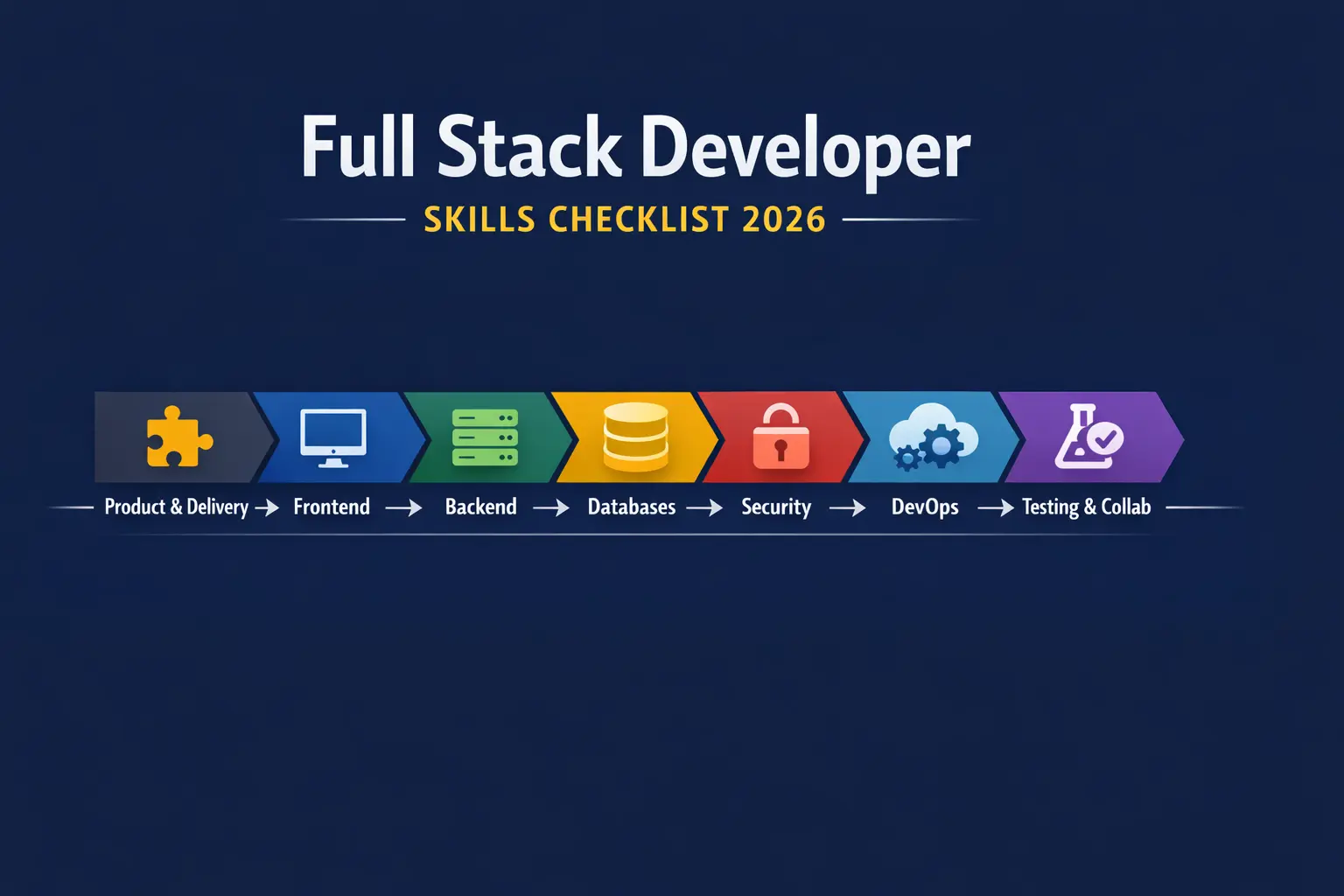
Hiring a full stack developer in 2026 requires far more than checking if someone knows a frontend framework and a backend language. Modern full stack development sits at the intersection of software engineering, user experience, database management, and real-world delivery.
Whether you’re evaluating a Python full stack developer, a Java full stack developer, or a JavaScript-focused web developer, this full stack developer skills checklist is designed to help hiring managers assess the technical skills, soft skills, and system-level thinking required to succeed in modern development projects.
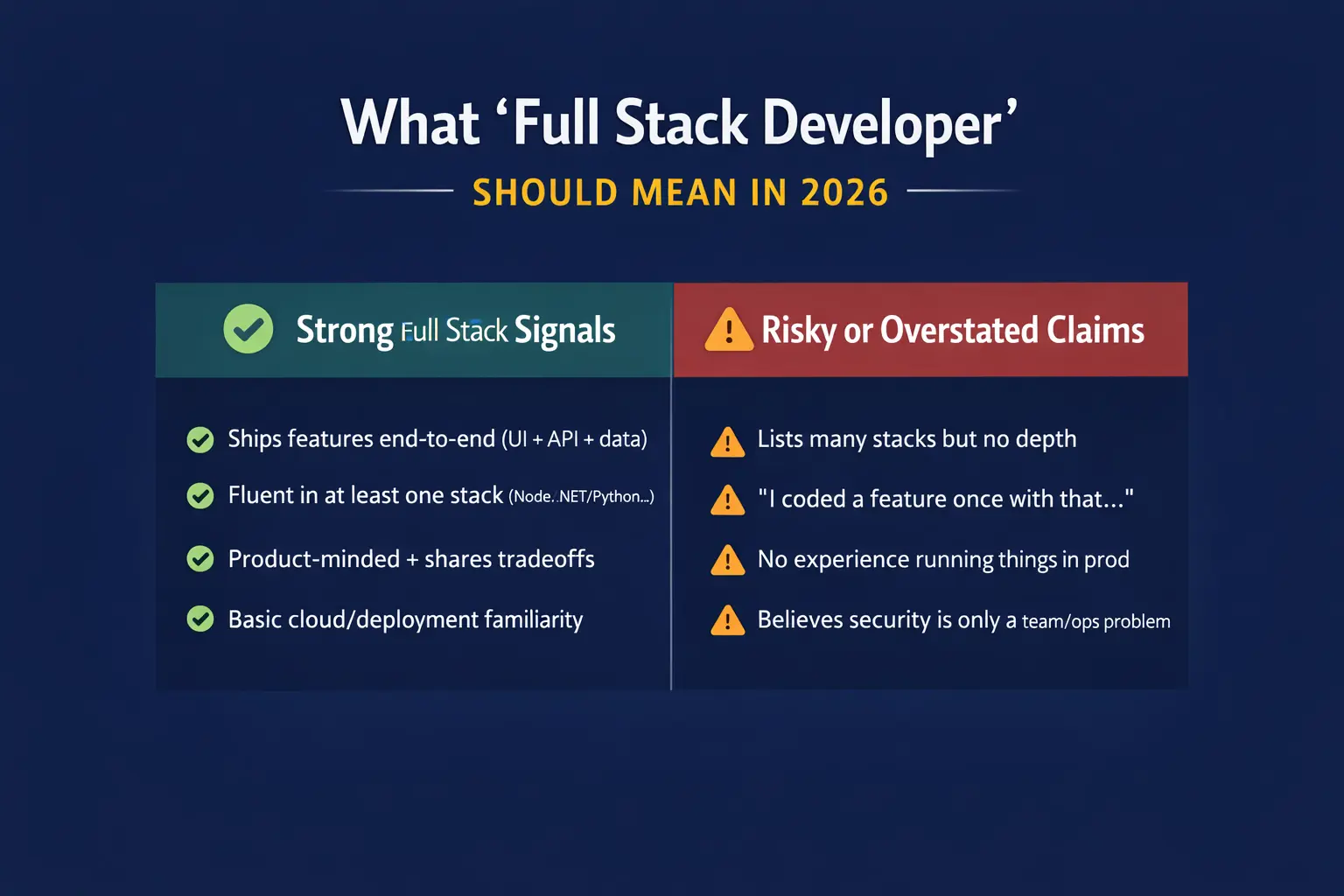
What “Full Stack Developer” Should Mean in 2026
In 2026, a full stack developer is best understood as a software engineer capable of owning features across the entire lifecycle of a development project—from user interface to backend logic to deployment readiness.
This includes:
- Designing usable user interfaces with strong user experience principles
- Building secure and scalable backend services
- Managing data flow and database management
- Understanding modern web architecture
- Collaborating with product, design, and project management teams
A full stack developer is not expected to master everything equally—but they must reliably ship features end to end.
Full Stack Developer Skills Checklist: Core Technical Areas
This full stack developer skills checklist is organized around how real software systems are built today.
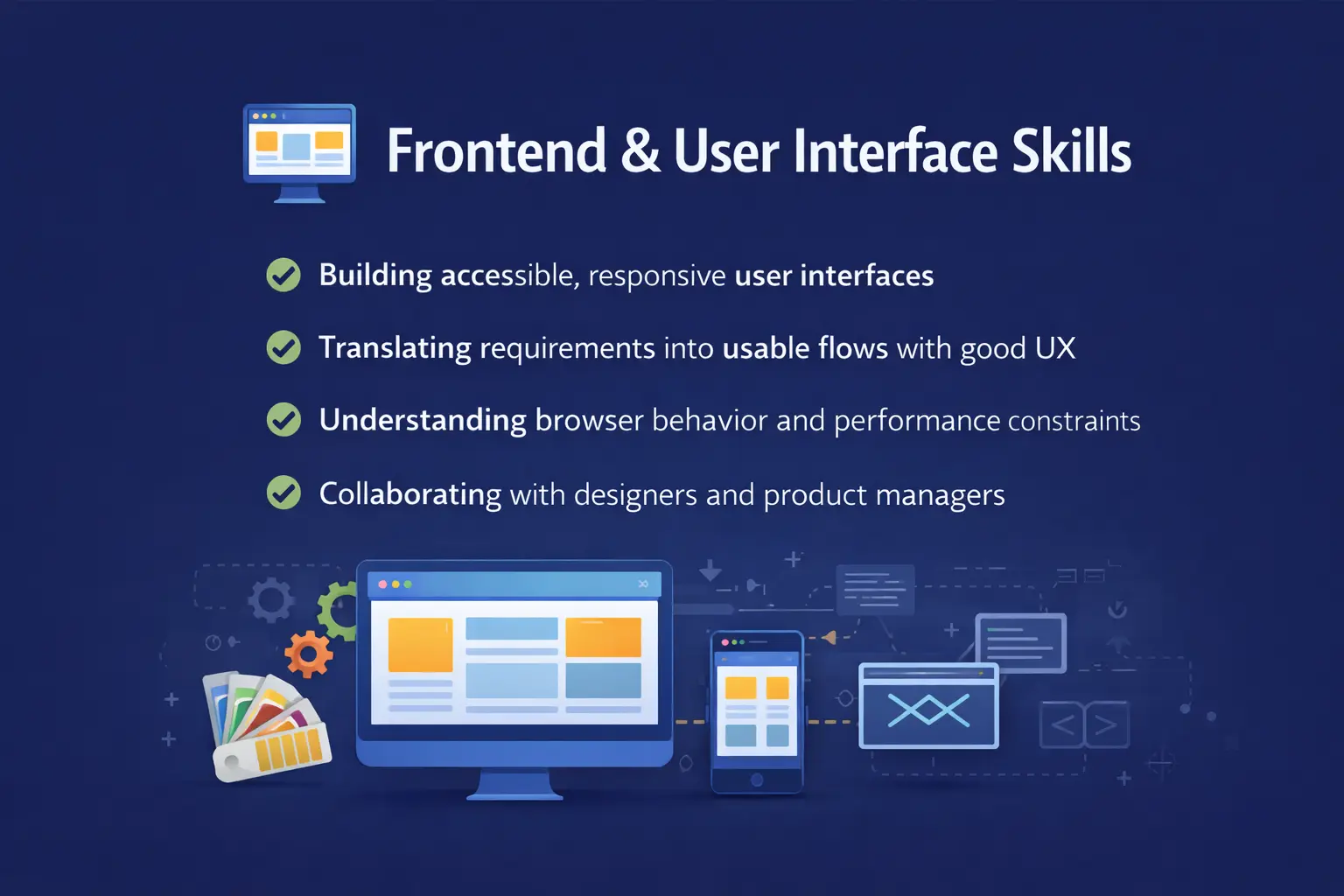
1. Frontend & User Interface Skills
A strong full stack developer must be competent as a front end developer, even if frontend is not their deepest specialization.
Key skills include:
- Building accessible, responsive user interfaces
- Translating requirements into usable flows with good user experience
- Understanding browser behavior and performance constraints
- Collaborating with designers and product managers
- Managing client-side state and error handling
These skills ensure the developer can contribute meaningfully to customer-facing features—not just APIs behind the scenes.
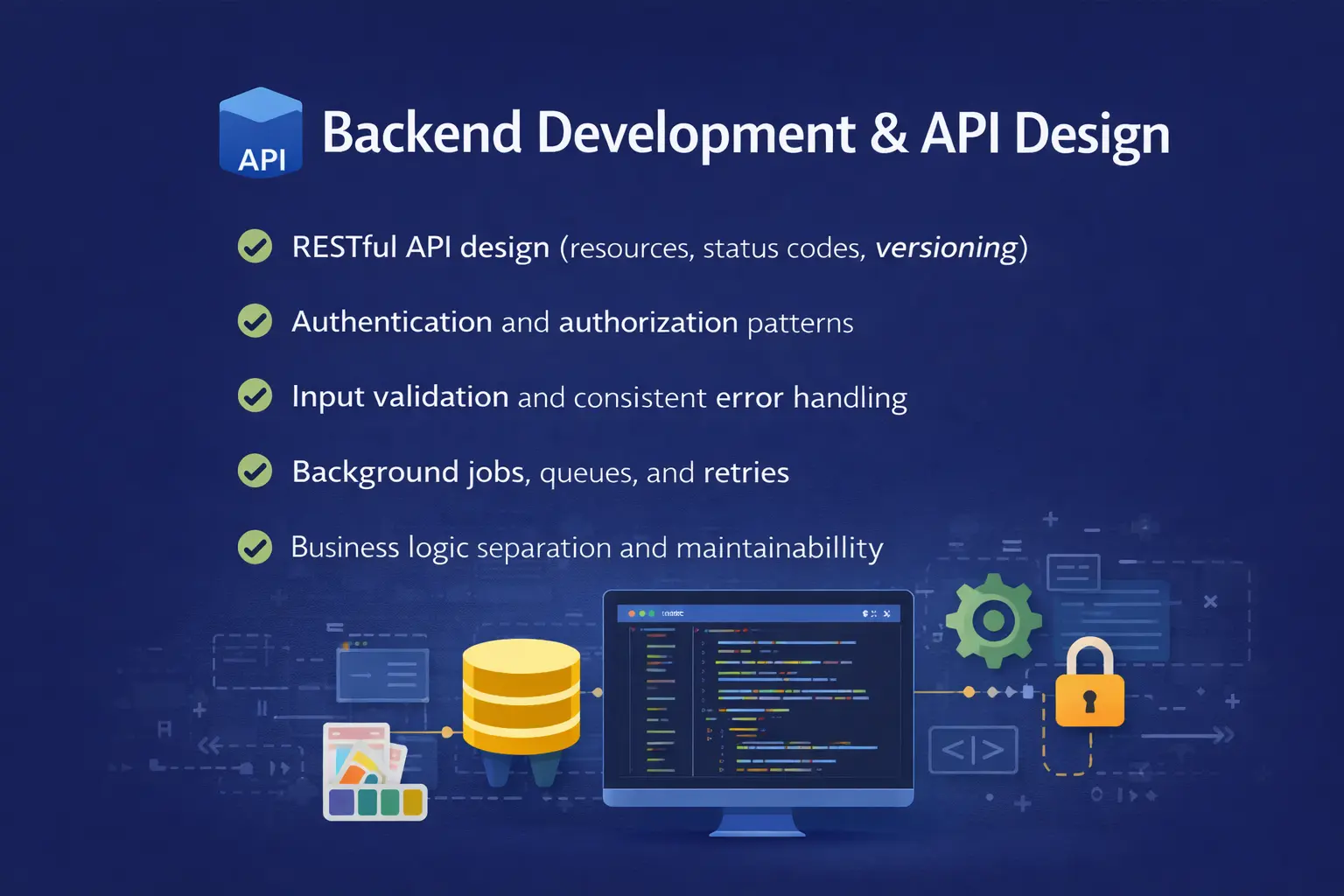
2. Backend Development & API Design
Backend competence is foundational for full stack development. A capable backend developer should demonstrate:
- RESTful API design (resources, status codes, versioning)
- Authentication and authorization patterns
- Input validation and consistent error handling
- Background jobs, queues, and retries
- Business logic separation and maintainability
Whether working as a Java developer, Python engineer, or Node-based backend developer, these backend skills are essential for reliable systems.
3. Programming Languages: Python, Java & Full Stack Context
Python Full Stack Developer Skills
A strong Python full stack developer typically brings:
- Framework experience (Django, FastAPI)
- Clean API and service-layer design
- Awareness of automation, scripting, and integrations
- Ability to support systems connected to data analytics, data science, or machine learning pipelines
Java Full Stack Developer Skills
A solid Java full stack developer usually demonstrates:
- Experience with enterprise-grade backend services
- Strong computer science fundamentals
- Transaction handling and system scalability awareness
- Integration with frontend teams and UI workflows
Language choice matters less than software engineering discipline and production experience.

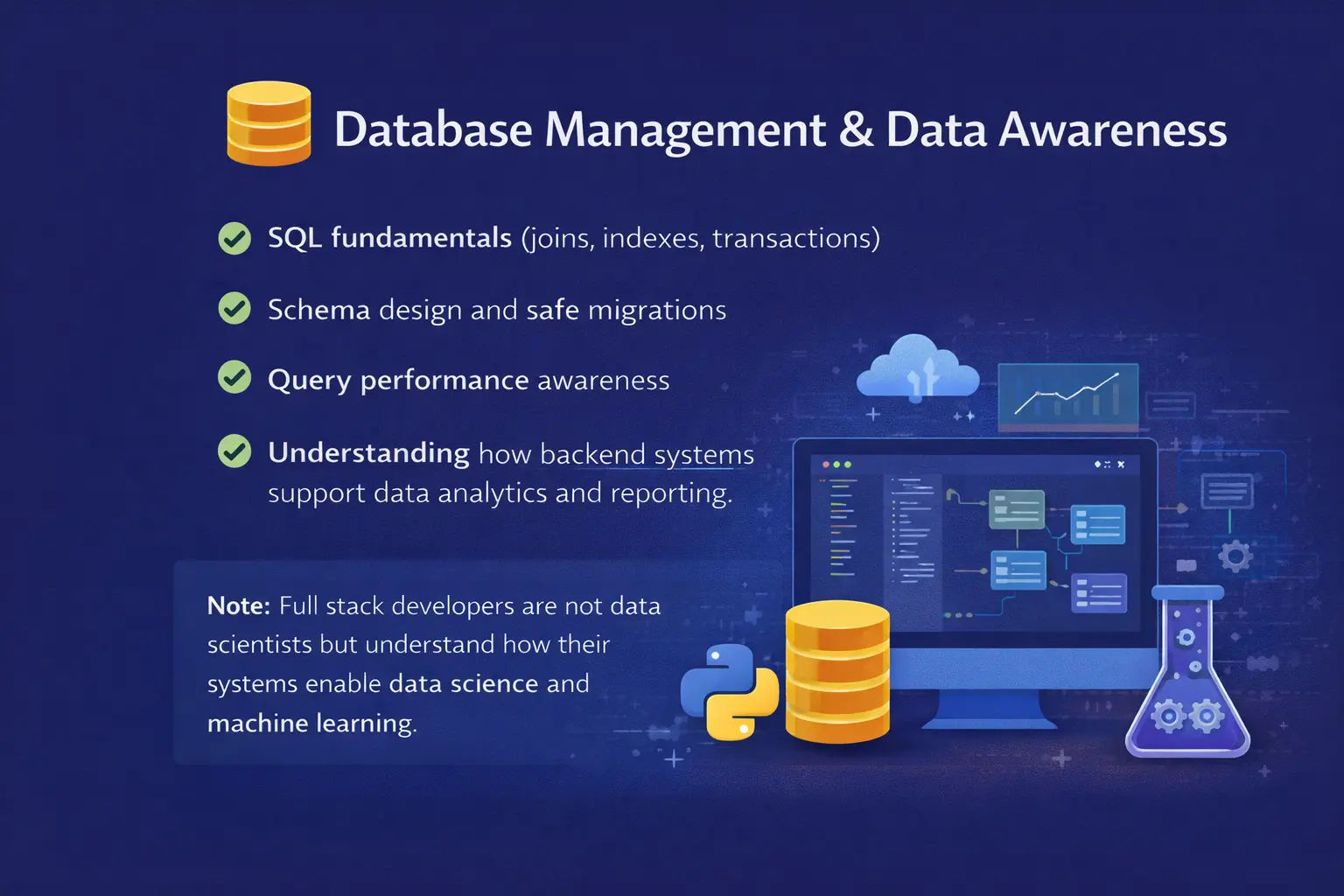
4. Database Management & Data Awareness
Modern full stack developers must be comfortable working with data, even if they are not data specialists.
Key database management skills include:
- SQL fundamentals (joins, indexes, transactions)
- Schema design and safe migrations
- Query performance awareness
- Understanding how backend systems support data analytics and reporting
While full stack developers are not expected to perform data science or build machine learning models, they must design systems that enable those teams to work effectively.
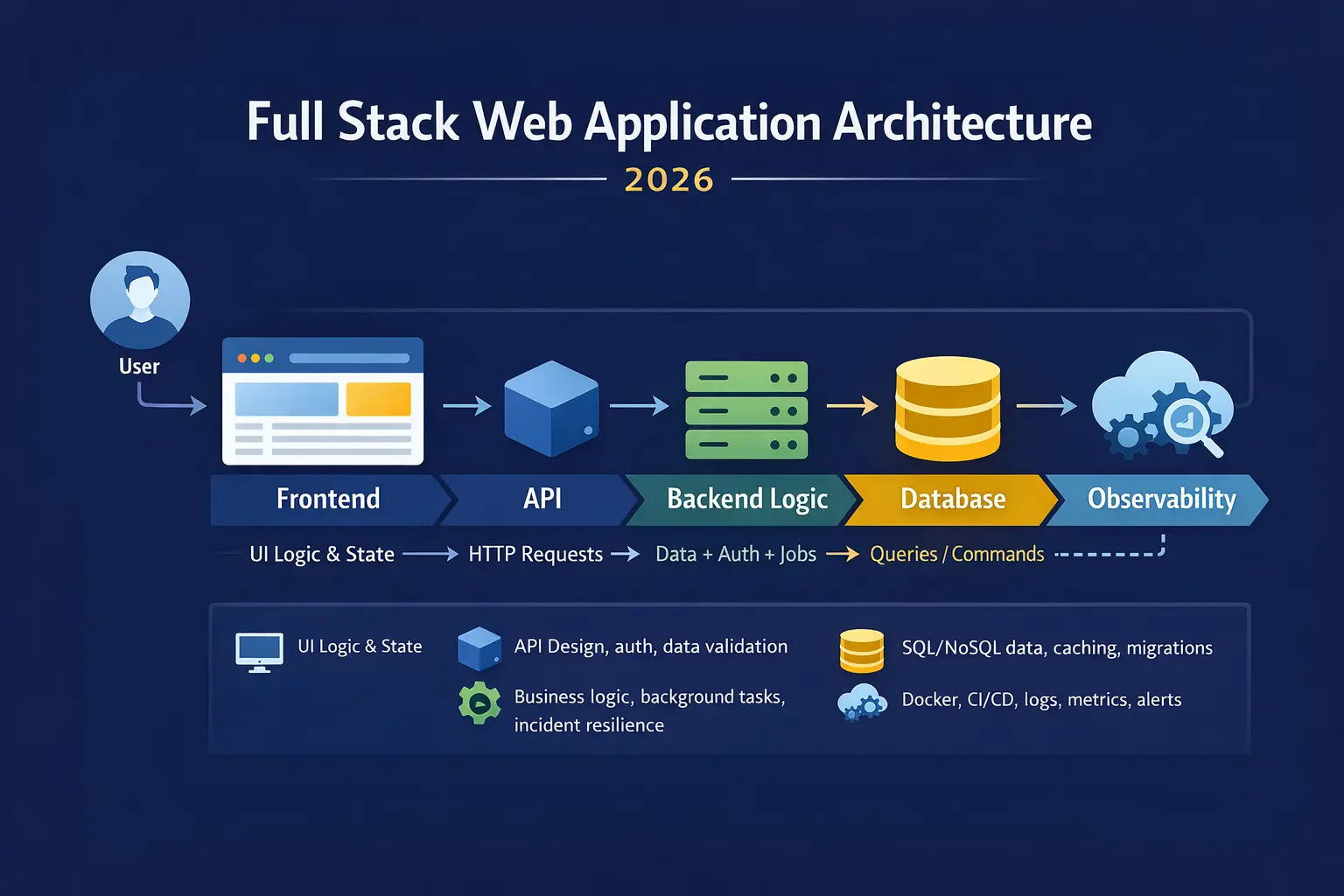
5. Web Architecture & System Thinking
Beyond writing code, senior full stack developers understand web architecture and system interactions.
This includes:
- How frontend, backend, databases, and services interact
- Awareness of scalability and failure modes
- Understanding environment separation (dev, staging, production)
- Observability basics (logs, metrics, traces)
These skills distinguish experienced software engineers from code-only contributors.
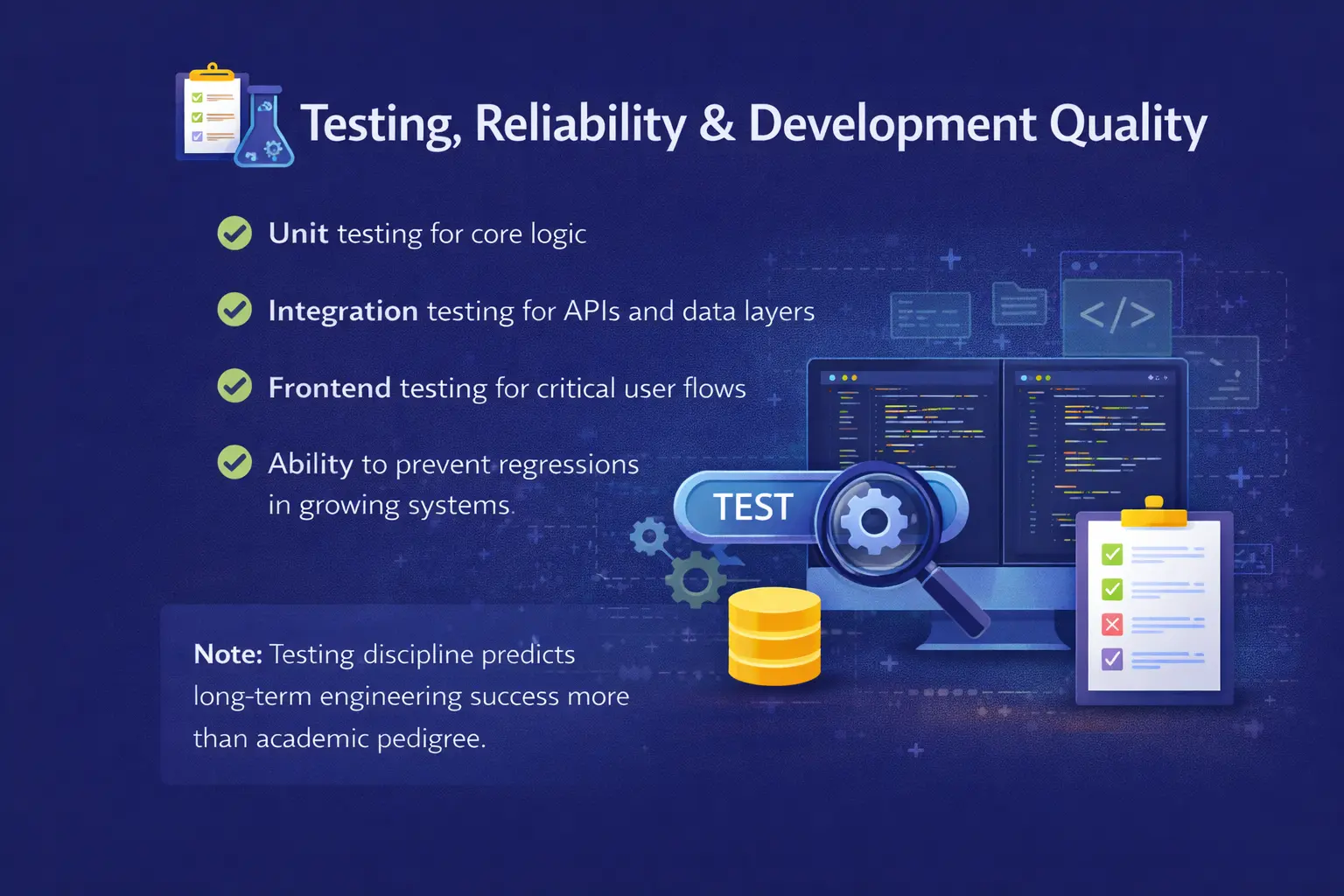
6. Testing, Reliability & Development Quality
Testing maturity is one of the strongest predictors of long-term success in full stack roles.
Strong candidates demonstrate:
- Unit testing for core logic
- Integration testing for APIs and data layers
- Frontend testing for critical user flows
- Ability to prevent regressions in growing systems
Testing discipline reflects professional software engineering habits rather than academic knowledge.
7. Soft Skills & Collaboration (Often Undervalued)
Technical ability alone does not make a strong full stack developer. High-performing teams consistently value soft skills such as:
- Clear communication with non-technical stakeholders
- Ownership of features and outcomes
- Comfort discussing tradeoffs and technical debt
- Collaboration with design, product, and project management
- Ability to mentor or guide less experienced developers
These skills directly affect delivery speed and team health.
8. Artificial Intelligence & Modern Integrations (Nice-to-Have)
In 2026, some full stack developers also interact with artificial intelligence systems.
This may include:
- Integrating AI APIs into applications
- Supporting ML-backed features
- Building interfaces for AI-powered workflows
This does not replace core full stack skills—but it increasingly complements them in modern development projects.
Career Path: From Junior to Senior Full Stack Developer
Understanding the career path helps set realistic expectations:
- Junior: Executes tasks with guidance, strong fundamentals
- Mid-level: Independently delivers full features
- Senior: Improves architecture, reliability, and team velocity
Progression depends more on ownership and system thinking than on the number of tools known.
Project Ideas: How to Evaluate Full Stack Skills Properly
Interview questions alone rarely reveal real capability. Practical project ideas are far more effective.
High-signal evaluation projects include:
- Designing a small web application
- Building an API with authentication and persistence
- Handling errors, edge cases, and data integrity
- Explaining architectural decisions clearly
These exercises reveal real-world full stack development skills.
Using This Full Stack Developer Skills Checklist
Ready to implement this checklist in your hiring process? Download our Full Stack Developer Hiring Scorecard (click the "Free eBook PDF" button in the sidebar column)—a structured rubric aligned with this framework that helps you evaluate candidates consistently across technical competence, system thinking, and collaboration skills.
If you'd prefer expert guidance through your full stack hiring process—from defining role requirements to technical interviews—reach out to our team. We help engineering leaders build versatile, high-performing development teams.
You can also explore our role directory and get access to our database of candidates where you can browse by role, experience, country and skills.
Paula Tellez
BetterWay Devs Inbound Marketing Manager
https://www.linkedin.com/in/paula-tellez/
Suggested Reading
Hiring Full Stack Developers: When You Need Versatility on Your Team
Hiring .NET + Angular Full Stack Developers: Your 2026 Guide
Full Stack Developer Roadmap Resource (roadmap.sh)
OWASP API Security Best Practices (OWASP.org)


.png)
